epIQ Index Top 100 Communities Nationwide Monthly Report [May 2025]
epIQ Index Top 100 Communities Nationwide Monthly Report [April 2025]
The Real Reason Residents Leave (And What You Can Do About It): Insights from Ready, Set… Respond!
By Carla J. Alicea, Director of Research & Performance at SatisFacts
We’ve all heard it before: “The rent is just too &#%! high.” But what if that’s not the actual reason for resident attrition?
In multifamily, rent increases often take the blame for non-renewals. It’s a convenient explanation—but not the complete story. The truth is, most residents don’t leave because of one big problem. They leave because of small, cumulative moments of unmet expectations that quietly chip away at their perception of value. That’s the friction we don’t always see—but it’s the friction that matters most.
In a recent Ready, Set, Respond conversation with multifamily consultant and marketing innovator Sara Scarborough Graham, we explored the disconnect between what operators think drives resident turnover and what is actually happening behind the scenes. Her insight? Rent may be the headline, but friction is the story.
Friction Is the Hidden Deal Breaker
Friction isn’t always loud. It’s the service request that didn’t get a follow-up. The cold, impersonal renewal notice that feels more like a bill than an invitation. The resident portal that’s confusing or clunky. Over time, these micro-moments create frustration, and when a rent increase enters the picture, even a small one, it becomes the tipping point.
Sara calls this the “daily value equation”—a resident’s ongoing calculation of whether the service and experience they receive feels worth the price they’re paying. When that answer shifts from yes to no, renewal becomes an uphill battle.
Internal Feedback Loops Matter
One of the most effective ways to uncover—and resolve—these friction points is through internal feedback loops. At SatisFacts, our Insite® Resident Feedback Surveys are built to capture insights at every key touchpoint: tour, move-in, service request, and pre-renewal. These early signals help communities take proactive steps before a minor frustration snowballs into a move-out.
But the key isn’t just collecting feedback. It’s what you do with it.
Feedback that is ignored erodes trust; however, feedback that leads to action builds loyalty. That’s why the most successful operators treat resident feedback as more than a metric—it’s a relationship-building tool.
Disconnect Between Marketing and Operations
Another driver of resident dissatisfaction is the misalignment between marketing and operations. If the website promises 24-hour maintenance but the reality is inconsistent service, residents feel misled. That’s not just a branding problem—it’s a trust issue.
Breaking down silos and fostering regular communication between departments isn’t optional anymore. It’s essential. And that includes reviewing what your teams are actually promoting, what they’re actually delivering, and how residents are actually responding.
Empowered Teams, Empowered Residents
Sara said it best: “Empowered teams create empowered residents.” Supporting your frontline teams with the tools, training, and autonomy to deliver excellent service isn’t just good for morale—it directly impacts renewal rates. When teams are treated like task managers, they operate that way. But when they’re equipped as experience designers, the whole resident journey improves.
Want to go deeper into Sara’s insights? Download her free retention resource, The Real Reasons Residents Leave, which includes a friction audit and strategies for reducing value erosion.
At the end of the day, it’s not just about price. It’s about trust. And trust is built one frictionless moment at a time.
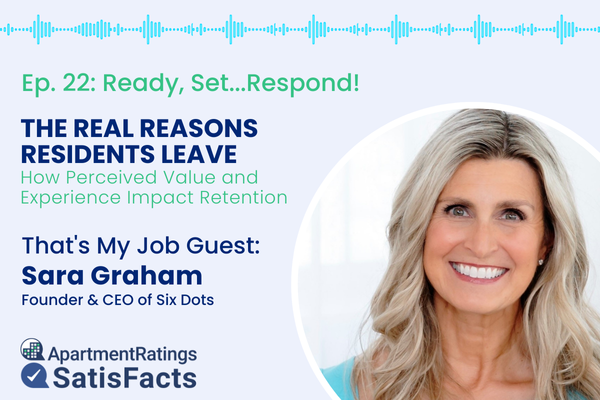
Ready, Set… Respond! [Ep. 22: The Real Reasons Residents Leave]
How Rental Fraud Impacts Retention & Reputation: Insights from Ready, Set… Respond!

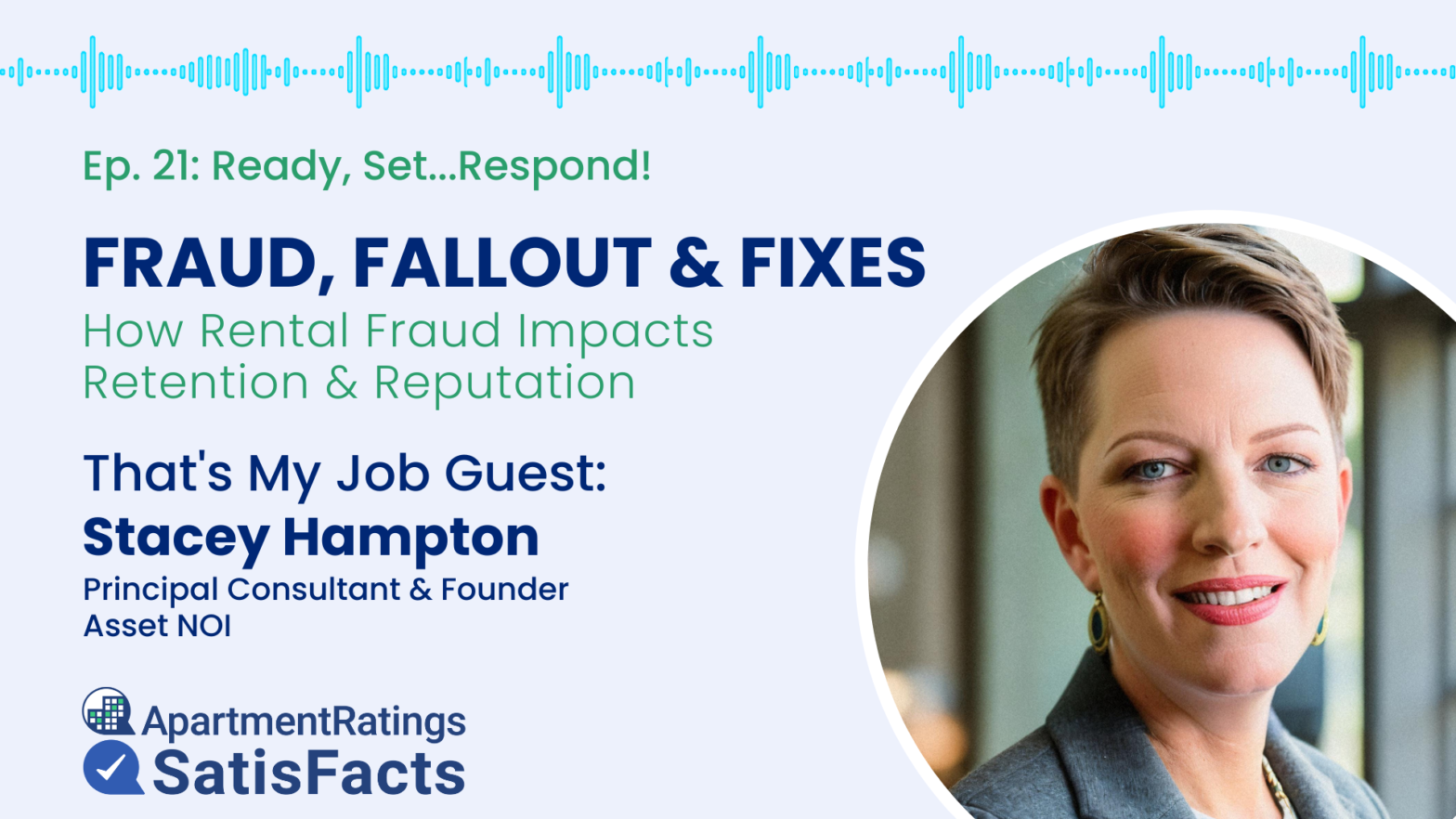
Fraud in multifamily housing is a growing problem, impacting everything from occupancy rates to financial stability and even online reputation. In episode 21 of our monthly education webinar, Ready, Set…Respond, we tackled this critical issue with industry expert, Stacey Hampton, from Asset NOI. Stacey shared eye-opening insights into how fraud syndicates operate, how they exploit leasing processes, and what operators can do to mitigate their risk. If you missed the live discussion, you can watch the full webinar on our YouTube channel.
Understanding the Scope of Rental Fraud
Fraud in rental housing is no longer just about fake pay stubs or falsified employment records. Today, sophisticated fraud rings sell complete synthetic identities—bundles of real Social Security numbers, legitimate-looking bank accounts, and falsified rental histories—to help unqualified renters bypass application screenings. These fraud syndicates, often advertising on social media platforms, market their services with promises like, “Guaranteed approval anywhere!”
One alarming statistic that Stacey shared was that fraudulent rental activity can cost a community anywhere from $100,000 to $500,000 per year. These losses stem not only from unpaid rent and evictions, but also from increased vacancy periods, turnover costs, and damage to a community’s reputation.
How Fraud Impacts Reputation and Retention
At SatisFacts & ApartmentRatings, we emphasize the importance of reputation and resident retention. During our conversation, Stacey confirmed that fraud is not just a leasing issue—it has direct consequences on reputation and retention as well. Fraudulent renters, often emboldened by anonymity, are less likely to follow community policies, leading to disruptions such as excessive noise complaints, unauthorized subletting, or even criminal activity.
One striking example Stacey shared involved a community where a resident, who had leased an apartment under a synthetic identity, was involved in a violent altercation. When authorities investigated, they found that the person living in the unit was not the individual listed on the lease. These incidents can lead to a decline in resident satisfaction and increased negative online reviews, further damaging a community’s ability to attract and retain high-quality renters.
How to Detect and Prevent Fraud in Leasing Applications
So, what can operators do to safeguard their communities against rental fraud? Stacey outlined a multi-layered approach that includes:
✅ Identity Verification: Go beyond basic ID checks or a ‘one service does it all’ approach. Use AI-powered solutions that cross-check addresses, credit history, and social security validation to ensure consistency.
✅ Income & Employment Verification: Be wary of applicants with new credit histories or inconsistencies in their financial records. Some fraudsters create fake businesses to generate fraudulent pay stubs.
✅ Credit & Rental History Screening: Watch for red flags such as repeated denials at different properties or applicants using identification instead of a driver’s license, which can be easier to falsify.
✅ Deposit Insurance & Risk Mitigation: Since fraud will always evolve, having financial protections in place—like deposit insurance—can help reduce financial exposure.
✅ Centralized Screening Teams: Given how complex fraud detection has become, centralizing the application approval process can significantly improve oversight. This allows on-site teams to focus on resident experience while fraud experts analyze applications for potential risks.
Taking Action: Industry-Wide Solutions
The fight against fraud requires continuous vigilance and adaptation. Fraudsters are becoming more advanced, with some estimates suggesting rental fraud will triple by 2028. That’s why it’s critical for operators to share knowledge, implement proactive screening measures, and collaborate with screening partners to stay ahead.
If you’re confident in your current fraud prevention system—or if you’re struggling to keep up—share your experiences in the comments section of our LinkedIn post. Let’s keep the conversation going and work together to make our communities more secure.
Watch the full Ready, Set…Respond webinar on rental fraud prevention: